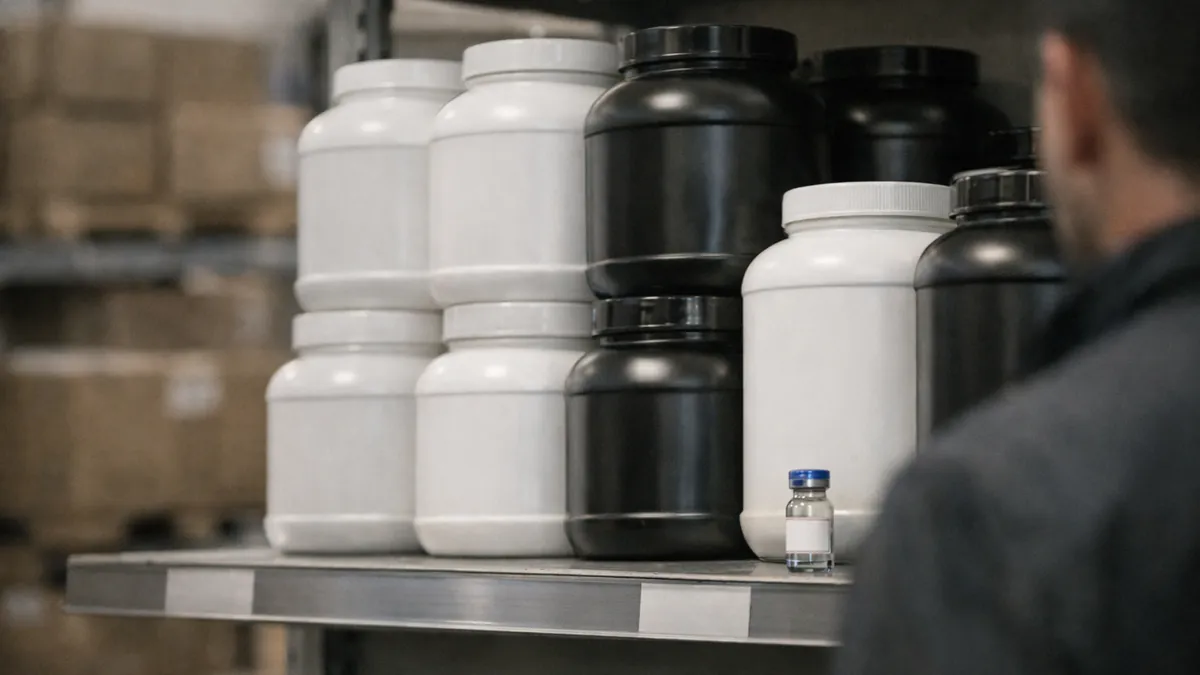
The boom of GLP-1 medications - primarily the peptide-based active ingredients semaglutide and tirzepatide - has created an unexpected side effect: a global whey protein shortage. What sounds like a niche issue is becoming one of the most significant supply crunches in dairy industry history.
How are GLP-1 peptides linked to whey protein demand?
GLP-1 medications like semaglutide and tirzepatide are peptide-based drugs that reduce appetite and lower caloric intake by 16 to 39 %. Healthcare professionals consistently recommend increased protein intake - typically 1.2 to 1.5 g per kg of body weight - to counteract muscle loss during rapid weight reduction. Whey protein shakes are the most convenient way to meet these targets. The result: a wave of additional demand hitting an already strained supply chain.
The numbers: price explosion and empty inventories
Market data tells a clear story:
- WPC80 (Whey Protein Concentrate 80 %): Prices surged from approximately $5,000 per ton in June 2023 to over $27,000 by June 2026 - a roughly 450 % increase. The Vesper Price Index (VPI) hit about $11 per pound in March 2026.
- WPC34 (standard grade): According to USDA Dairy Market News, prices rose 83 % over two years and 20 % in the last six months alone. One manufacturer announced it will stop production after summer 2026.
- Finished products: Retail protein powders and bars increased 50 to 110 % compared to 2024, according to industry sources cited by Outwork Nutrition.
- Sold out: Several major suppliers have pre-sold their entire 2026 allocation - new customers cannot secure supply.
A historic shift: whey becomes more valuable than cheese
Vesper's analysis reveals a historic turning point: cheese manufacturers now earn more from whey than from the cheese itself. "Whey has quietly become the more valuable output on the line," notes Jasper, Senior Dairy Analyst at Vesper. This is a fundamental shift in an industry that treated whey as a cheap byproduct for decades.
Rabobank analyst Lucas Fuess warns of a second-order effect: the race for whey capacity could flood the cheese market. New production facilities - including $200 million from Idaho Milk Products and €126 million from Ireland's Tirlán - won't deliver meaningful supply before late 2026 or 2027 at the earliest.
What does this mean for consumers?
For athletes and health-conscious individuals not taking GLP-1s, whey protein is becoming more expensive and harder to find. Industry experts expect further price increases through 2026. Plant-based alternatives (pea, rice, hemp) or collagen peptides are gaining traction - though they don't match whey's complete amino acid profile.
The nutrition strategy under GLP-1 therapy is thus becoming not just a health question but a cost consideration as well.
This is not medical advice. This article is for informational purposes only and does not replace individualized nutritional or medical counseling. Consult a qualified healthcare professional regarding your diet during GLP-1 therapy.
Sources
- The Guardian – Fears whey protein shortage as use of weight-loss drugs fuels global demand (June 2026)
- New Hope Network – Consumer demand drives whey protein shortage, price increases (June 2026)
- Vesper – How the rise of GLP-1 is reshaping the dairy protein industry (2026)
- Outwork Nutrition – The Whey Protein Apocalypse (Feb 2026)
- Chain Drug Review – GLP-1 boom fuels whey protein shortage concerns (2026)
- USDA Dairy Market News – Whey Protein Concentrate pricing (2026)