Nutrition
Muscle on GLP-1: LEAN-PREP Study 2026
The LEAN-PREP study systematically investigates whether resistance training and increased protein intake can prevent muscle loss on semaglutide and tirzepatide. Early data shows muscle can be preserved with the right strategy
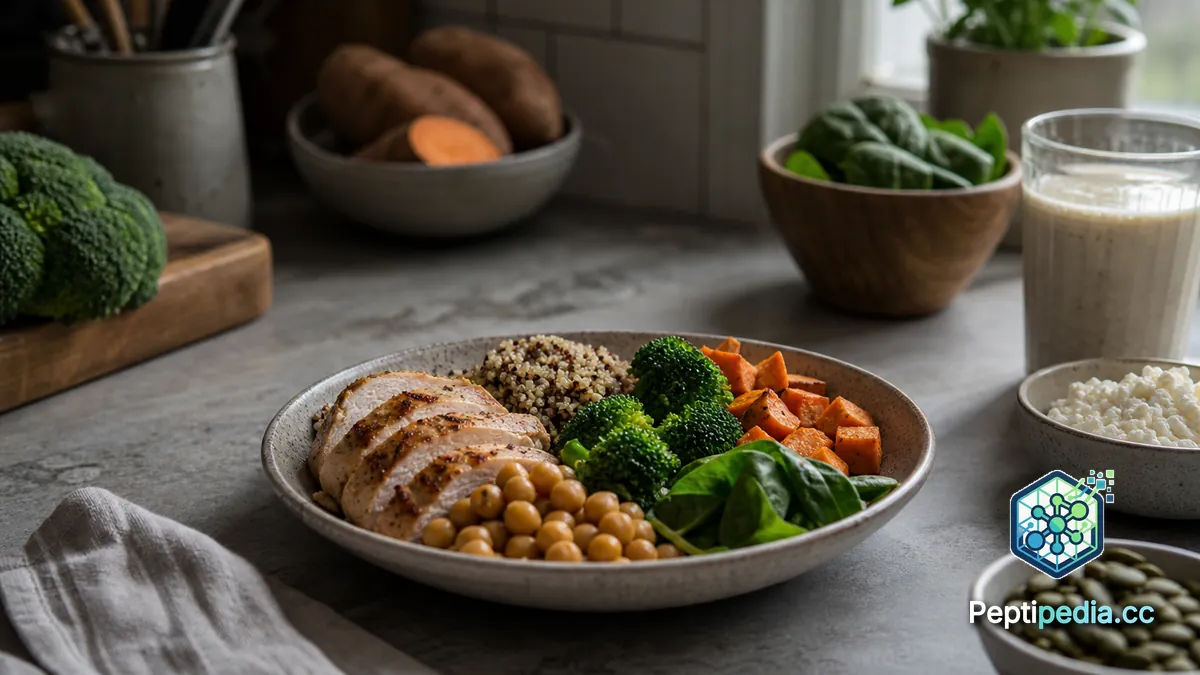
Modern weight-loss medications are extremely effective at suppressing appetite. But the weight lost isn't only fat; unfortunately, muscle mass also declines. Injectable drugs like Ozempic and Wegovy (active ingredient: semaglutide) and Mounjaro (active ingredient: tirzepatide) both belong to the GLP-1 class. GLP-1 is a natural messenger substance in the body (a so-called peptide hormone) that is released in the gut after eating and tells the brain: you're full. Semaglutide and tirzepatide are both peptide-based drugs that activate a specific messenger receptor in the body (the GLP-1 receptor) and thus amplify the feeling of fullness. The key question in 2026: can exercise and nutrition prevent this muscle loss? A new study will provide first answers in the coming months; meanwhile, several parallel analyses offer current insights.
What is the LEAN-PREP Study?
The LEAN-PREP study (LEAN mass Preservation with Resistance Exercise and Protein) is a randomized controlled trial (that is, a study in which participants are randomly assigned to groups, with one group receiving no special intervention for comparison), published in BMJ Open in April 2026. It examines whether resistance training and/or increased protein intake can prevent muscle loss in 232 adults with obesity initiating semaglutide or tirzepatide therapy. Participants were divided into four groups: control, resistance training alone, protein supplementation alone, and a combination of both. The study runs for six months, with muscle mass measured by MRI.
What Do Current Data Show?
Several recent analyses complement the LEAN-PREP study with important findings:
- Vienna long-term study (2022-2025, 486 patients; documented only via secondary financial-news sources to date): Reports that resistance training and increased protein intake were associated with better muscle mass preservation under GLP-1 therapy. Exact figures are not verifiable without a peer-reviewed (independently vetted by expert colleagues) primary scientific source.
- Report in the German Ärzteblatt (May 2026): Reports significant muscle loss under GLP-1 agonists and emphasizes that concurrent resistance training and adequate protein intake are the most effective countermeasures.
- Medscape analysis (2025): A prospective study of 200 adults showed that with medically supervised resistance training (3×/week) and increased protein intake, muscle mass loss was only about 3%, with total weight loss of 12-13%.
How Much Protein Do You Really Need?
Recommendations for GLP-1 users are significantly higher than standard guidelines. While the general recommendation is 0.8 g per kilogram of body weight, expert guidelines for people on GLP-1 therapy suggest 1.2-1.6 g/kg/day, and up to 2.2 g/kg/day for those doing regular resistance training. That means: a person with a target weight of 80 kg should consume 96-128 g of protein daily. This is often difficult to achieve through diet alone, which is why many turn to protein shakes or supplements.
If you want to track your protein intake or calculate your needs, the reverse-dose calculator is a handy tool, and the peptide library provides detailed profiles of the active compounds.
Why Muscle Preservation Matters
Muscle mass isn't just about strength and movement. It largely determines your basal metabolic rate, that is, how many calories your body already burns at rest (for example, while sleeping). Lose muscle and you burn fewer calories even at rest. This increases the risk of the dreaded rebound weight gain after stopping the medication. Additionally, declining muscle mass raises the risk of falls and injuries, especially in older users.
GLP-1 itself is a peptide hormone naturally produced in the gut. Semaglutide and tirzepatide are peptide-based drugs that mimic this mechanism, and that's precisely why they affect appetite so strongly. If you're using them, actively thinking about muscle preservation is essential.
Bottom Line: What This Means for You
The 2026 evidence is clear: muscle loss on GLP-1 is not inevitable. With 2-3 resistance training sessions per week and a protein intake of 1.2-2.2 g/kg/day, muscle mass can largely be preserved. The LEAN-PREP study will provide further robust data in the coming months, but the direction is already clear: those who prioritize muscle preservation from the start benefit most in the long run.
This is not medical advice. This article is for informational purposes only. Consult a physician or nutrition professional regarding your diet or exercise plan.
Sources
- LEAN-PREP Study Protocol - BMJ Open 2026
- Vienna long-term study on GLP-1 and muscle preservation - ad-hoc-news.de
- Meta-analysis: Muscle loss under GLP-1 agonists - Deutsches Ärzteblatt
- Resistance Training + Protein May Lower GLP-1 RA Muscle Loss - Medscape 2026
- ClinicalTrials.gov: LEAN-PREP Study (NCT06885736)
Not medical advice.