Safety
Swissmedic stops 23 peptide shipments from Poland
On 22 June 2026, Swissmedic, BAZG and SSI inspected 46 peptide shipments in Switzerland and seized 23 - around 80 % came from Poland, often misdeclared
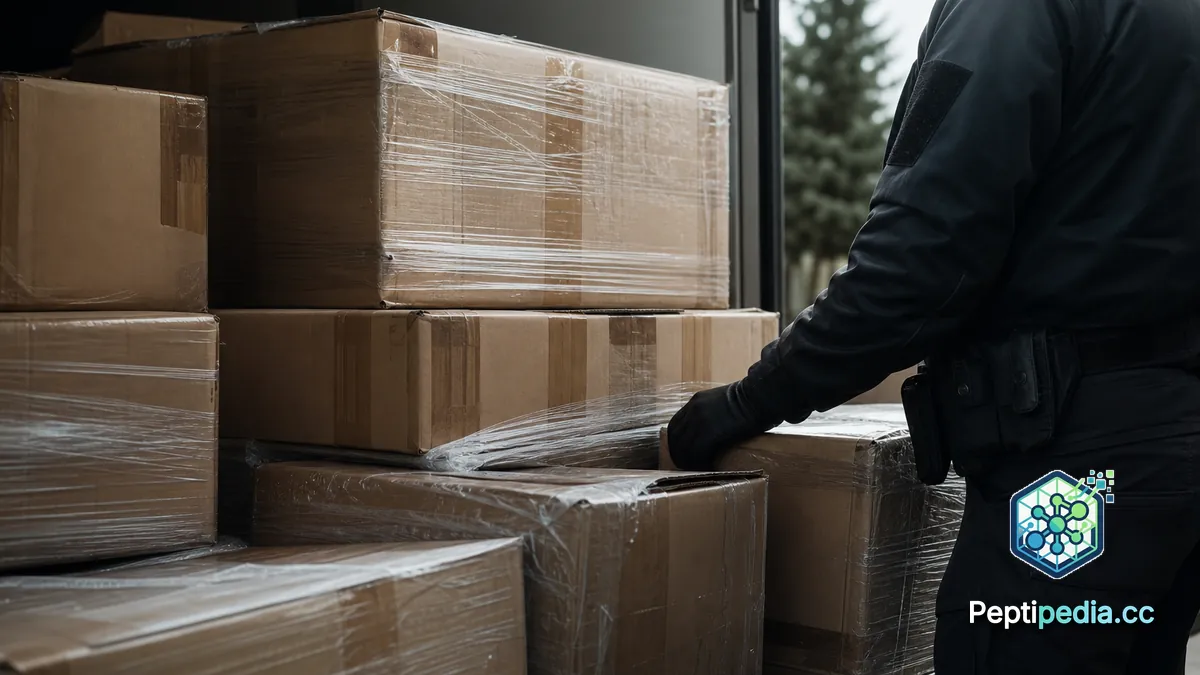
On 22 June 2026, Swiss authorities conducted a targeted inspection of peptide shipments at the border. Swissmedic, the Federal Office for Customs and Border Security (FOCBS), and Swiss Sport Integrity (SSI) jointly checked 46 packages suspected of containing illegal peptide preparations[1]. They seized 23 packages, classifying 21 as doping agents and two as unauthorised medicines. Peptides are short-chain protein molecules that function as metabolic messengers, such as GLP-1 hormones or insulin; Semaglutide, the active ingredient in Ozempic, is a prominent example of this group.
Key results of the Peptides 2026 inspection campaign
- Swissmedic, FOCBS, and Swiss Sport Integrity (SSI) inspected 46 peptide shipments during the "Peptides 2026" campaign on 22 June 2026, resulting in 23 seizures.[1]
- Of the 23 seized packages, 21 were identified as doping substances by Swiss Sport Integrity, while two were classified as unauthorised medicines by Swissmedic.[1]
- FOCBS reports that approximately 80 % of the inspected shipments originated from Poland, often featuring misdeclared contents from uncontrolled sources.[2]
- Customs released 23 packages because the small quantities fell under legal exceptions for private use, though recipients received a formal risk warning.[1]
- This campaign is part of a 2026 European enforcement wave, including MHRA raids in the UK (12,000 doses seized) and EMA warnings regarding illegal GLP-1 medicines.
Details of the Swissmedic peptide inspection on 22 June 2026
During the "Peptides 2026" campaign on 22 June 2026, Swiss authorities inspected border shipments suspected of containing illegally imported peptides. The operation identified 46 suspicious packages, leading to the seizure of 23 peptide-based preparations.[1]
Of the 23 seized packages, Swiss Sport Integrity classified 21 as doping-relevant substances, while Swissmedic identified two as unauthorised medicines. The remaining 23 packages were released as the quantities were small enough to fall within legal exceptions for private use. While customs often tolerate small amounts for personal use, the authorities explicitly acknowledge this legal loophole.[1]
Recipients of the released packages were issued a written notice stating that "use of the product is at the recipient's own responsibility and own risk". This formal warning serves as a legal safeguard for authorities against the documented health risks of these substances.[1]
Peptide supply chains and the role of Poland as a hub
According to FOCBS data, around 80 % of the checked peptide shipments originated from Poland. These products were frequently misdeclared and sourced from uncontrolled suppliers, a pattern reflecting how grey-market peptide supply chains increasingly utilize Eastern European hubs.[2]
While Swissmedic has not published a detailed list of the seized contents, it is confirmed that a large portion consisted of doping-relevant substances. Possession of these items without a medical prescription is legally sensitive in Switzerland, and sourcing from anonymous online suppliers carries significant risks regarding purity and sterility.
Peptides marketed for "weight loss", "muscle building", or "anti-ageing" are not approved medicines in Switzerland or the EU. Many buyers underestimate the legal and health risks, as evidenced by reports submitted to the Vendor Radar.
Legal risks and consequences for peptide imports in the EU
Although Switzerland is not an EU member, it is a central hub for European pharmaceutical imports. Similar border checks in Germany, Austria, or the Netherlands would likely yield comparable seizure numbers. The UK raid by the MHRA on 28 May 2026, which removed 12,000 doses from the market, confirms this international trend.
For you, the practical consequence is clear: ordering peptides without a medical prescription is a high-risk gamble across the EU and Switzerland. You face risks concerning purity, sterility, correct declaration, and potential criminal prosecution. The safety page and the Vendor Radar help you identify warning signs, while the peptide library lists which substances have a documented role in medicine or research.
Swiss authorities intend to repeat these targeted inspections and share findings with Europol and Interpol[1]. Ordering peptides through unofficial channels now carries an increasing risk of seizure and prosecution.
Safety rules for peptide handling and harm reduction
A few basic rules can significantly reduce the risks associated with peptide handling. These safety guidelines apply whether you order, mix, or use peptides in Switzerland, Germany, or Austria. Based on extensive Vendor Radar data, I have condensed the most important points into three rules:
- No order without a medical prescription. Obtain preparations only as compounded medicines-individually mixed for you-from a licensed pharmacy or a specialist compounding pharmacy.
- Every vial should include a batch-specific certificate of analysis (CoA). This document must confirm HPLC purity to identify impurities and use mass spectrometry to verify that the active molecule matches your order.
- Never mix substances without following a step-by-step guide and maintaining strict sterile technique.
Skipping any of these safety conditions creates an incalculable risk to your health regarding purity and sterility, regardless of vendor promises.
Note: This article is for educational purposes only and does not constitute medical advice or any dosing or sourcing recommendation.
Sources
Not medical advice.