
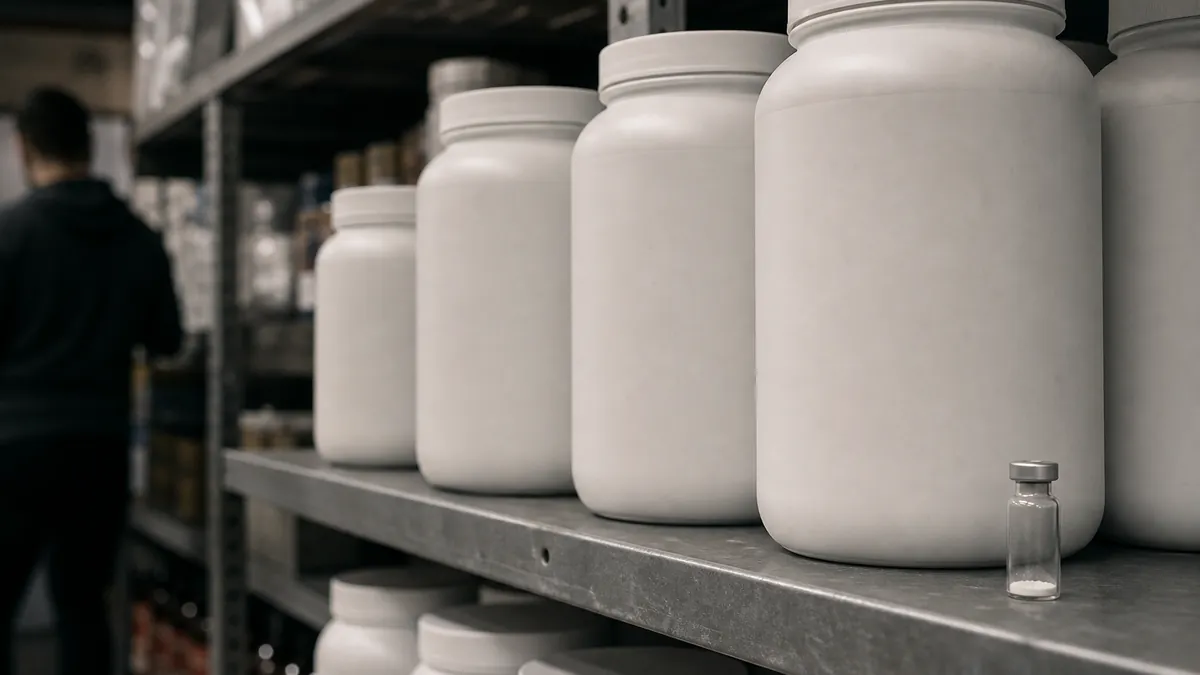
The boom of GLP-1 peptides - primarily the peptide-based active ingredients semaglutide and tirzepatide - is not just transforming medicine but creating an entirely new food category: GLP-1 companion nutrition. What began with Danone's Oikos Fusion launch in 2025 has evolved into one of the fastest-growing segments in the food industry by 2026.
What is GLP-1 Companion Nutrition?
GLP-1 users consume 16 to 39 percent fewer calories on average. At the same time, their protein needs increase to prevent muscle loss - studies indicate that roughly 20 percent of weight lost on GLP-1 medications can come from muscle mass. This creates a unique nutritional profile: high-protein, fiber-enriched, nutrient-dense, but small in portion size. Traditional foods are often too caloric or too bulky. The industry is responding with specially formulated products.
Danone as Pioneer: Oikos Fusion and Protein Shakes
In August 2025, Danone launched Oikos Fusion under its Oikos brand - the first product explicitly developed for GLP-1 users. This cultured dairy drink delivers 23 g of protein, 5 g of prebiotic fiber, and vitamins B3, B12, A, and D in just 7 fl oz (approx. 207 ml), with no added sugar. Danone also created a dedicated nutrition hub providing dietary guidance for GLP-1 users (Source: NutritionInsight, August 2025).
In May 2026, Danone expanded its Oikos Protein Shakes line with Strawberry and Mocha Latte flavors - now delivering 30 g of protein per serving (Source: NutritionInsight, May 2026). Derek Neeley, VP of Protein Shakes at Danone US, stated: "With these flavors, we're expanding how and when people enjoy Oikos."
Market Data: From $3.1B to $15.4B
Multiple research firms have quantified the segment for the first time:
- Market Decipher (June 2026): The GLP-1 diet protein market is valued at $3.1B in 2026, projected to reach $15.4B by 2036 - a CAGR of 17.4% (Source: PRNewswire/Market Decipher, June 2026).
- Future Market Insights (May 2026): The total GLP-1 diet food market is estimated at $3.1B (2026), forecast to grow to $15.4B by 2036. Ready meals hold 28% share, high-protein products 31% (Source: FMI, May 2026).
- Insightace Analytic (May 2026): The GLP-1 companion nutrition market is growing at 13.6% CAGR through 2035 (Source: Insightace Analytic, May 2026).
Whey Becomes More Valuable Than Cheese
One of the most surprising consequences: whey protein is now more expensive than cheese. According to the Vesper Price Index, whey protein isolate reached approximately $11 per pound by March 2026 - cheese producers now earn more from whey than from the cheese itself. WPC80 prices surged from about $5,000/ton (2023) to over $27,000/ton (2026), a roughly 450% increase (Source: New Hope Network, May 2026).
The US dairy industry has responded with $11 billion in new manufacturing capacity across 19 states, but analysts expect meaningful market relief no earlier than 2027 (Source: Vesper/USDA data 2026).
What This Means for Consumers
For GLP-1 users, a growing range of tailored products is emerging - from protein shakes to meal replacements and fiber-rich snacks. For everyone else, whey-based products will remain expensive for the foreseeable future. Plant-based alternatives such as pea or rice protein are gaining traction but cannot yet fully match whey in taste and price.
Learn more in our coverage of the whey protein shortage driven by the GLP-1 boom and how GLP-1 peptides are reshaping the entire grocery market.
This is not medical advice. This article provides neutral information on market developments and does not replace individual dietary counseling or medical recommendations.
Sources
- NutritionInsight: Oikos launches first GLP-1-specific yogurt drink (August 2025)
- NutritionInsight: Oikos expands protein shake line (May 2026)
- PRNewswire/Market Decipher: Global Protein Market Report 2026-2036
- Future Market Insights: GLP-1 Diet Food Market 2026-2036
- New Hope Network: Whey protein shortage and price increases (May 2026)
- Vesper: How GLP-1 is reshaping the dairy protein industry