Nutrition
AI Study: 88% of GLP-1 Users Fall Below Protein Needs
An AI-powered nutrition study reveals 88% of GLP-1 users don't meet protein recommendations - averaging just 0.6 g/kg/day instead of the recommended 1.2-1.6 g/kg. Presented at the European Congress on Obesity 2026
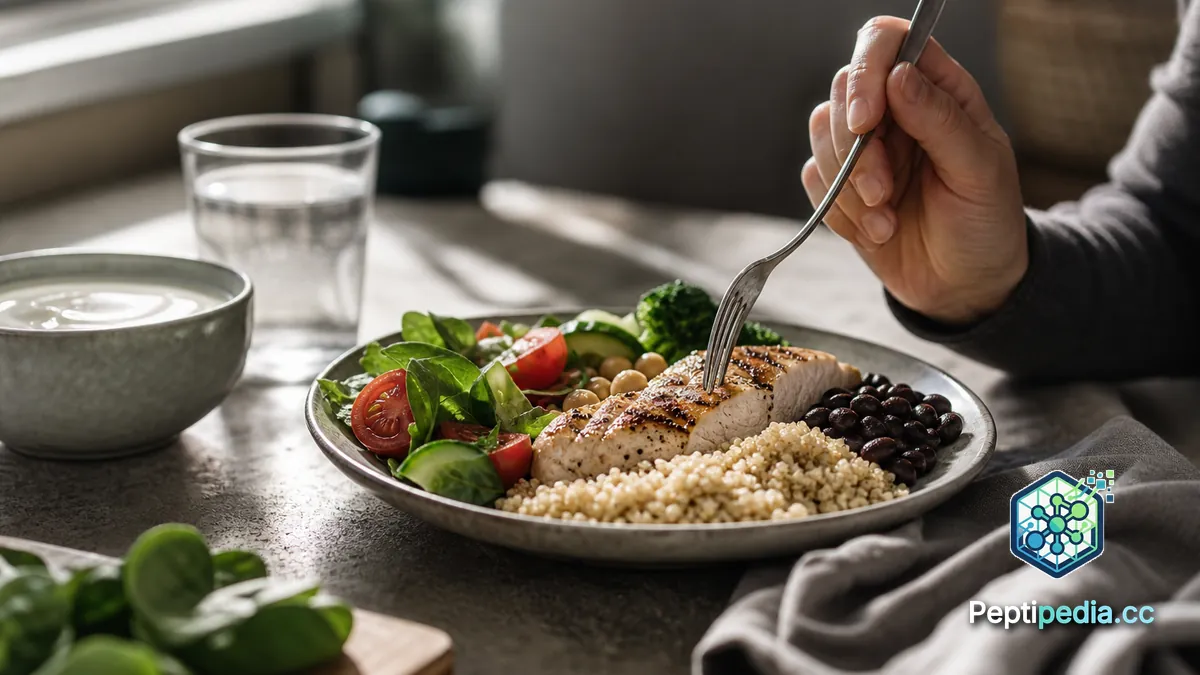
Modern weight-loss injections with so-called GLP-1 drugs (like semaglutide and tirzepatide, sold under brand names such as Ozempic and Wegovy) curb appetite and lead to less food on the plate. A new study presented at the European Congress on Obesity (ECO 2026) now shows that most users consequently eat far too little protein. Researchers used an AI-powered tracking app to collect real-world dietary data over months - and the findings are striking.
What exactly did the study examine?
The team led by Dr. Rebecca De Lorenzo at IRCCS San Raffaele Hospital in Milan analyzed 5,741 days of dietary data from 332 adults with overweight or obesity. Data was collected between July 2025 and February 2026 via a mobile tracking app. Of the participants, 116 were using GLP-1 drugs (semaglutide or tirzepatide), while 216 served as a non-user comparison group. These GLP-1 medications are peptide drugs that mimic the body's own satiety hormone (so-called incretin hormones - gut hormones released after eating that signal the brain you're full).
The analysis shows: GLP-1 users consumed an average of only 1,102 kcal per day (comparison group: 1,281 kcal). But the critical finding is protein intake: weight-adjusted, it averaged just 0.6 g per kilogram of body weight per day - far below national guidelines of 0.9 g/kg and even further from the 1.2-1.6 g/kg that nutrition experts recommend for GLP-1 users. 88 percent of GLP-1 users fell below protein recommendations.
Why is protein deficiency under GLP-1 so critical?
GLP-1 medications like semaglutide and tirzepatide reduce appetite and slow gastric emptying. This leads to lower food intake - but also to lower protein intake. The problem: during rapid weight loss, the body loses not only fat but also valuable muscle mass. Studies show that 25-45% of weight loss on GLP-1 can come from lean mass (everything in the body that isn't fat - mostly muscle, but also water and organs). Adequate protein intake is the most important lever to counteract this.
The ECO study also found that GLP-1 users skipped meals more frequently, further reducing opportunities for adequate protein distribution throughout the day. Interestingly, the general ratio of main nutrients (the so-called macronutrient distribution - what percentage of calories comes from protein, carbs, and fat) was nearly identical between groups - so it's not diet quality but simply the reduced food volume that causes the protein gap.
What does this mean in practice?
The study authors emphasize the need for proactive nutritional monitoring and personalized dietary guidance for GLP-1 users. Practical takeaways include:
- Prioritize protein: Include a protein source at every meal - eggs, legumes, lean meat, fish, or plant-based alternatives.
- Don't skip meals: Even with low appetite, eat small, protein-rich meals spread throughout the day.
- Know your target: Aim for 1.2-1.6 g of protein per kg of body weight daily. At 80 kg body weight, that's 96-128 g of protein per day.
- Add strength training: As the LEAN-PREP study on muscle preservation under GLP-1 shows, resistance training is the second critical factor alongside protein intake.
In addition to nutrition apps, our reverse-dose calculator can help you keep your medication documentation clean - one small piece of more control in your therapy routine. However, it's not designed to track your actual protein intake.
Context: Not just a GLP-1 problem
Interestingly, protein intake was also suboptimal in the comparison group - about 70% of non-users also fell below national protein guidelines. Inadequate protein intake is widespread in the general population. But under GLP-1 therapy, the reduced calorie intake dramatically worsens the issue.
The researchers acknowledge limitations: the sample of 332 participants is relatively small, and data relies on self-reporting via an app. Still, the work provides valuable real-world data underscoring the need for integrated nutritional counseling alongside GLP-1 therapy.
This is not medical advice. This article is for general informational purposes only. If you have questions about your nutrition during GLP-1 therapy, consult a qualified healthcare professional or registered dietitian.
Sources
- EurekAlert: AI-based monitoring reveals protein deficiencies in people taking GLP-1 receptor agonists for weight loss
- Medical Xpress: AI-based monitoring reveals protein deficiencies in people taking GLP-1 receptor agonists for weight loss
- Retail Pharmacy Magazine: People taking GLP-1 weight loss drugs may not be consuming enough protein
- Scimex: People taking GLP-1 weight loss drugs might not be getting enough protein
- Bariatric News: AI-based monitoring reveals protein deficiencies in people taking GLP-1s
Not medical advice.