Market & Industry
GLP-1 Boom: Snack Industry Faces $12B in Lost Sales
The peptide boom is hitting the snack industry hard: EY-Parthenon projects up to $12B in lost snack sales over a decade. USDA data shows sales holding steady for now - but pressure is building
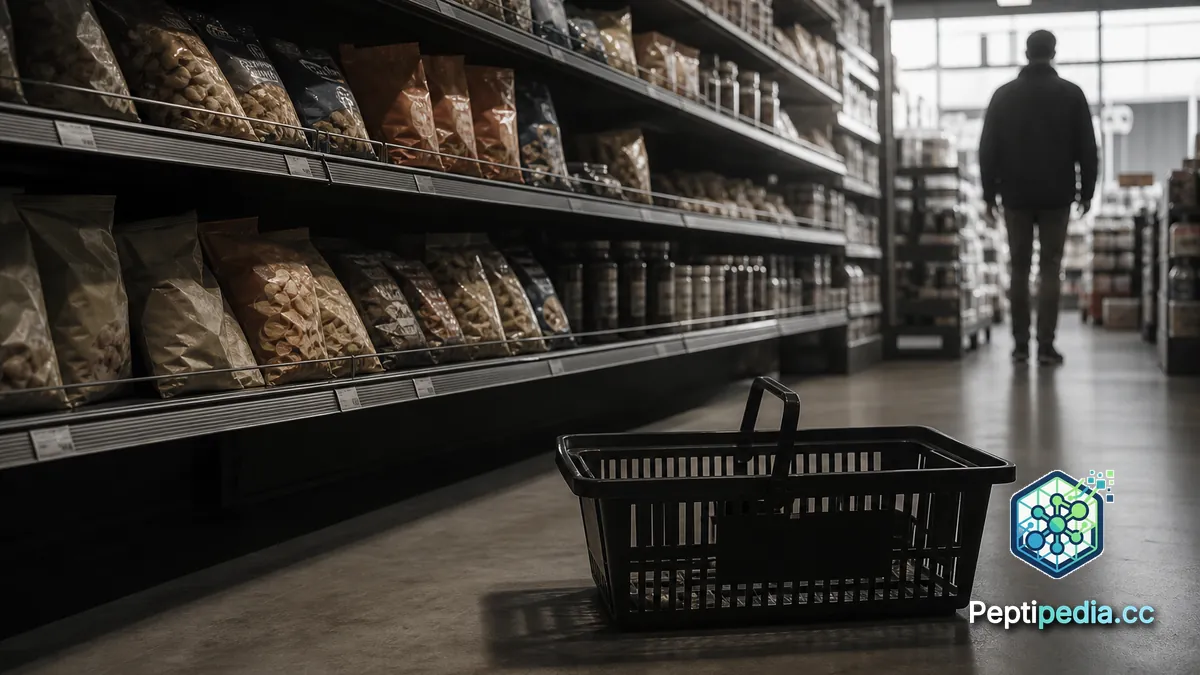
GLP-1 receptor agonists like Semaglutide and Tirzepatide could reduce snack sales by up to $12 billion over the next decade, according to EY-Parthenon projections. While USDA data shows snack units holding steady at over 10 billion per year in 2024, these peptide-based medications are fundamentally changing appetite regulation and weight loss management. The snack industry faces a significant shift as more users adopt these drugs for metabolic health.
Impact of GLP-1 Agonists on the Snack Industry
EY-Parthenon estimates a potential 3 percent shrinkage in the snack market due to GLP-1 medications, representing a $7 billion loss for salty snacks and $5 billion for sweet products. Industry experts at AlixPartners describe GLP-1 as a "real, growing headwind" for the sector. With 1 in 8 US adults currently using a GLP-1 medication, adoption is expected to double within the next ten years.
Research shows that GLP-1 households have reduced grocery spending by 5.3 percent on average, with high-income households seeing an 8 percent decline in ultra-processed, calorie-dense foods. These measurable household-level shifts illustrate how GLP-1 peptides are reshaping grocery baskets even before aggregate market data fully reflects the change.
Why Snack Sales Remain Stable Despite the GLP-1 Boom
USDA data from the February 2026 Agriculture Outlook Forum indicates that snack units remained steady at just over 10 billion per year in 2024, mirroring 2020 levels. USDA Chief Economist Justin Benavidez admitted: "I was surprised to see that we don't see that being borne out in the data, just yet."
The current stability in snack sales is likely because only 2 percent of adults use GLP-1 drugs specifically for weight loss, while 60 percent use them for diabetes or cardiovascular protection. The anticipated wave of weight-loss-motivated users, who are most likely to change their snack purchasing habits, is still emerging.
Consumer Trends: What GLP-1 Users Purchase Instead of Snacks
A Cornell study highlights that GLP-1 users are reallocating their grocery budgets away from savory snacks and alcohol toward healthier alternatives like yogurt and fresh fruit. This shift is already evident at the household level:
- Yogurt, fresh fruit, and protein bars show increased demand
- Spending on savory snacks decreased by approximately 10 percent
- Sweets, baked goods, and cookies experienced similar declines
- Alcohol consumption dropped by one-third among users
This evolving consumer behavior is driving the growth of the GLP-1 companion nutrition category. Major players like Danone have already introduced products like the Oikos protein line to specifically target the needs of GLP-1 users.
Industry Adaptation: How Food Companies Respond to GLP-1 Trends
Global food companies like Nestlé, PepsiCo, and Unilever are investing in product reformulations that emphasize higher protein and fiber content. As the "snack as meal replacement" trend grows, the focus shifts toward smaller portions and higher nutrient density. AlixPartners advises: "Surviving and thriving in a GLP-1 era will require a shift in mindset from how to sell more to how to stay in the basket when people eat less."
Comprehensive details on various GLP-1 compounds and their biological mechanisms can be found in the Peptide Library.
This is not medical advice. This article provides neutral market observation and does not replace individual nutritional counseling.
Sources
- AlixPartners: GLP-1 and the snack sector - Disruptive trend, not existential threat (March 2026)
- EY-Parthenon: Use of GLP-1 drugs by dieters may impact snack brands
- Reuters: Big Food pours millions into rebrands as obesity drugs reshape US demand (Feb 2026)
- FoodNavigator-USA: Snack sales stable despite GLP-1 weight loss trends - USDA data (March 2026)
- Cornell Chronicle: Ozempic is changing the foods Americans buy (Dec 2025)
- CNBC: GLP-1 diets - Restaurants add protein, fiber for weight loss drug users (March 2026)
Not medical advice.